Ramadan Kareem! Please note our Ramadan timings: Monday to Friday, 8:30 AM – 4:00 PM
Learn more about our Opening Hours.
Healthy eating starts with smart food shopping. Here you will find pointers on how to make the most of your trip to the grocery store. It is important to know how to read food labels to buy food that is right for you!
Ideally, you should eat food with the least number of ingredients - the more ingredients in a product, the more likely it is to be highly processed. Such foods are best avoided.
Also, consider your health risks.
For instance, If you have high cholesterol or high blood pressure, you have to follow a low-sodium diet that is rich in fruits, vegetables, and low-fat dairy. Talk to your doctor or a dietitian for personalised dietary advice. Also, consider your health risks.
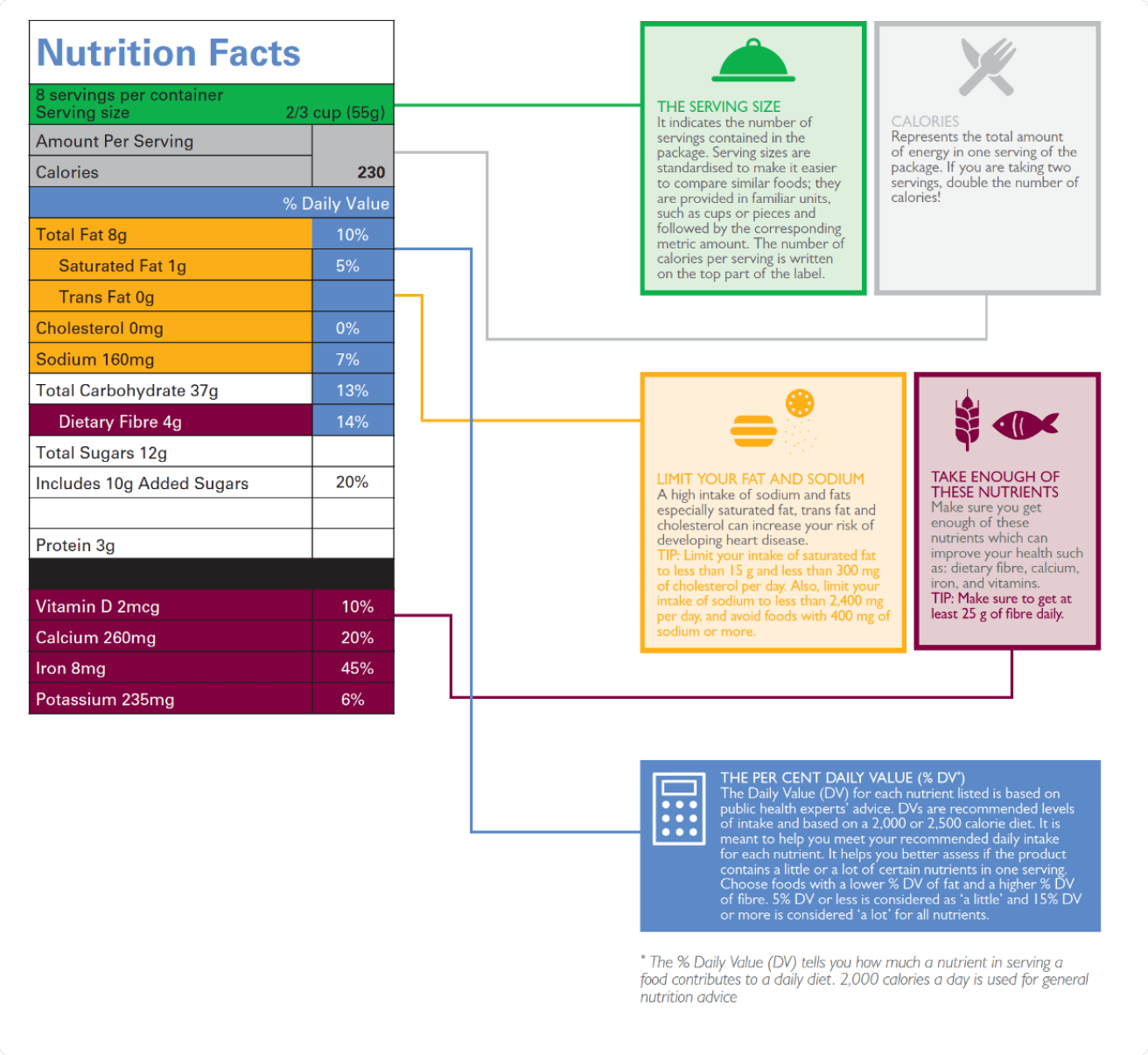
The best practice is to read food labels while shopping. Nutrition labels can help you:
Understanding Nutrient Claims
| Free | “low-fat” this product contains less than 3 g/serving “low sodium” this product contains less than 140 mg/serving |
| Low | “low-fat” this product contains less than 3 g/serving “low sodium” this product contains less than 140 mg/serving |
| Reduced | at least 25% less of the nutrient compared with a similar product |
| Light | at least 60% less of the nutrient compared with a similar product |

Types of Fat
| Saturated fats | This type of fat comes mainly from animal food sources such as red meat and butter in addition to coconut, palm and other tropical oils. |
| Trans fats | This type of fat is made mostly from oils through a food processing method called partial hydrogenation. Hydrogenation makes trans fats easier to cook with and less likely to cause food spoilage than naturally occurring oils. The main sources of trans fats include commercial baked goods, some types of fried foods, and shortenings. |
| Cholesterol | Cholesterol is a waxy, fat-like substance that occurs naturally in the body. It also comes from animal sources and plays a vital role in how every cell works. However, having too much cholesterol in the blood is one of the risk factors in developing coronary disease. |
The ingredient list helps you identify the contents of the product and whether it contains items that you need to avoid (in case of food allergy or intolerance).
The ingredients are usually listed in descending order, which means that when the food was manufactured, the first listed ingredient contributed the largest amount and the last ingredient listed contributed the least.